CINEMATOGRAPHY: blog analysis tasks
Alezey
Cinematography: blog analysis tasks
Find the opening sequence to a film or TV drama of your choice on YouTube and embed the video.
In the Jurassic World: Fallen Kingdom opening, the scene starts with an extreme long shot of the lagoon and gate in the storm, then moves to long and wide shots of the submarine accelerating. A slow tracking shot from behind follows it through the darkness. Inside, there are medium closeups of the crew and closeups of a character’s face, then back to medium closeup , a medium shot with a low-angle shows the submarine drifting as its headlights reveal dinosaur bones in a tight medium shot. Closeups of the workers’ faces blur into a low-angle pan of the machine slicing the bone of the dinosaur underwater. A long shot shows the submarine, followed by a low medium shot of the container drifting up. The storm reveals the Mosasaurus in a low-angle long shot, then a high-angle long shot shows the stormy atmosphere. A long shot shows the isolated worker at the gate, slowly zooming in, followed by a mid-shot during his dialogue and a low-angle pan of the helicopter lifting off. Tension builds with a back angle of the worker, and then a sudden closeup of his startled face - There is a closeup of the lagoon machine (the one used for the bone) , and this pans of to a low-angle shot of the helicopter. The scene continues with a medium closeup of the worker and zooms out slowly to a wide long shot revealing the Mosasaurus (silhouette) behind the submarine. There is then a wide-angle extreme long shot of the lagoon, which suddenly cuts to a POV shot of the screen showing they have lost connection. As the isolated worker closes the gate, the helicopter worker’s dialogue signals trouble, and the camera zooms in on the worker’s face while the thunderstorm reveals the T-rex rustling through the trees. This is followed by a close-up of the startled worker and a close-up/POV shot of the T-rex roaring. As he runs, the camera uses a long shot, then cuts to an extreme close-up of the dinosaur’s feet crushing the screen. He races for the helicopter and climbs the ladder, shown first in a high-angle shot/top shot of the T. rex roaring, then a low-angle shot of the same moment. The sequence ends with a high-angle long shot of the Mosasaurus leaping from the water and biting the ladder.
The camerawork in the scene gives the audience clues about the setting, narrative, and characters through the different shots, angles, and camera movements. Extreme long shots and wide shots of the stormy lagoon show how isolated and dangerous the setting is. Tracking shots behind the submarine and low-angle shots of the mosasaurus make it look huge and threatening, showing how vulnerable the characters are. Inside the submarine, medium closeups and closeups of the crew show their fear and reactions, helping the narrative move forward as it reveals it’s a thrilling movie. High-angle shots of the man climbing the ladder makes the audience urge for his safety and are on edge , while POV shots of screens or machines show important plot details, like how they lost connection from the submarine. Overall, the camerawork guides the audience through the story, highlights key events, and shows the characters’ fear and danger.
Secondly, find and analyse one film or TV still image.
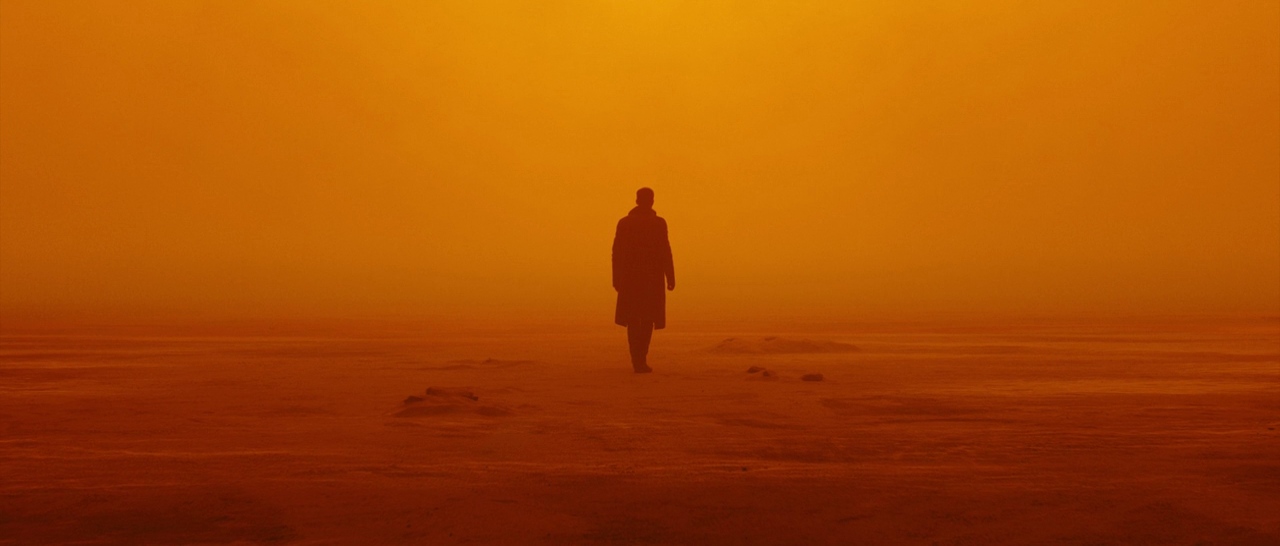
3) Analyse the camera shot/angle in the image and what it communicates to the audience.
In this still image from Blade Runner 2049, the camera uses a wide shot, showing the character who is small and a silhouette in the vast orange-lit desert. The wide shot establishes the setting and creates an enigma code, making the audience wonder why the character is there and what will happen next. The low-angle also emphasises the environment and the character’s isolation and creates tension due to the framing and empty space which is vast and shows his possible vulnerability. The audience would assume the action code is suggested by the character’s posture and direction of movement, hinting at potential conflict or journey. Overall, the shot uses a wide shot, low-angle, and the lighting to guide the audience’s understanding of the setting, narrative, and character.

Comments
Post a Comment