Alezey
mise en scene blog task : analysis
THE DARK KNIGHT (2008)
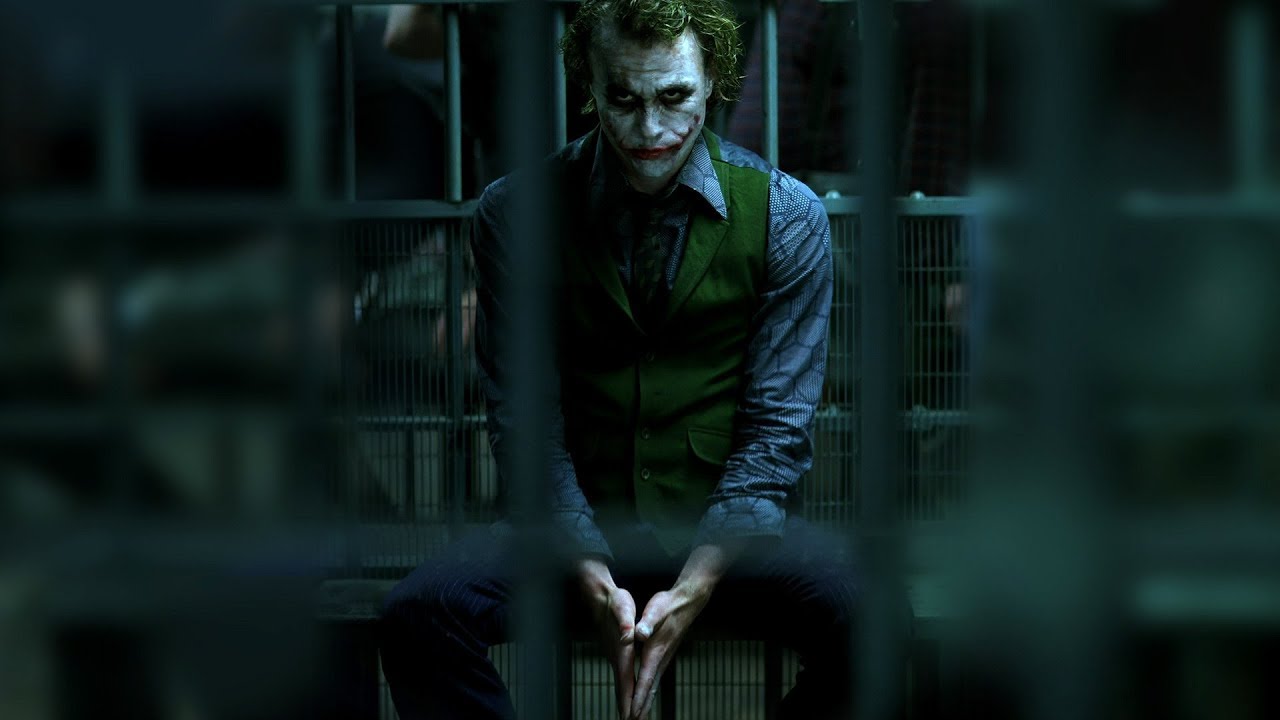
Costume: The joker’s purple suit is strong visual for his chaotic and uncontrolled character, immediately marking him as the antagonist within the crime genre and links to the future danger and his flashy yet intense personality.Lighting: The low-key lighting highlights the Joker as the dominant figure in the scene, making him seem eerie and creepy from the lighting, creating tension and an enigma code that generates numerous questions for the audience and further connotes a psychotic element.
Actor: His relaxed stance and unsettling serious face communicates menace. While his body language with hands put together, creates a sense of mischievousness and a potential action code as to what he did to be in this setting.
Make-up: The smudged clown face paint symbolises disorder and madness, reinforcing his role as an unpredictable villain and visually linking his appearance to his jumbled character.
Props: Although there are no props in the scene but the setting of him being in a cell connotes isolation and absence of weapons, linking to his eerie facial expression and a potential escape.
Setting: The dimly lit cell connotes the dark tone and aligns with his chaotic character, and creates an enigma code that builds suspense an
d action codes hinting at violence, and includes the binary opposition element (bad vs good) which emphasises his threat and the overall genre of the film.
THE CONJOURING (horror) - hide and clap scene
LA LA LAND - (romantic drama/musical) - planetarium scene
In The Conjuring ’s Hide and Clap scene, mise-en-scene is used to build extreme tension and fear. The setting is a dark, enclosed house, which creates a claustrophobic feeling. The low-key lighting leaves parts of the frame in shadow, making the audience to focus on what little they can see and imagine what’s hidden which creates a more frightful suspense. The costume and makeup are natural and simple, making the characters look realistic and vulnerable. The mother's facial expressions and shaky movements, heighten the tension. The use of sound sound particularly the clapping, acts as an enigma code—the audience doesn’t know who or what is clapping, creating suspense. Camera techniques like pans and close-ups work as action codes, building up to the jump scare when the hands appear from the dark.
In contrast, La La Land’s Planetarium scene uses mise-en-scene to express love and fantasy rather than fear. The setting is wide, open, and magical, representing escapism and the dream-like quality of romance. The lighting is soft, warm, and colourful, creating a sense of wonder. The costumes are bright and stylish, reflecting the characters’ personalities and emotional connection, while the actors—through dance and expressive movement—communicate affection and passion. The camera work includes smooth pans and shots that follow the characters as they float and dance, creating a fluid, dreamlike atmosphere. The moment they begin to fly serves as an enigma code, making the audience question on how and why.
Overall, both scenes use mise-en-scene to evoke emotion, but in very different ways. The Conjuring ’s Hide and Clap scene uses darkness, confined space, and sudden movements to create fear and tension, while La La Land’s Planetarium scene uses light, colour, and graceful movement to create romance.
Comments
Post a Comment